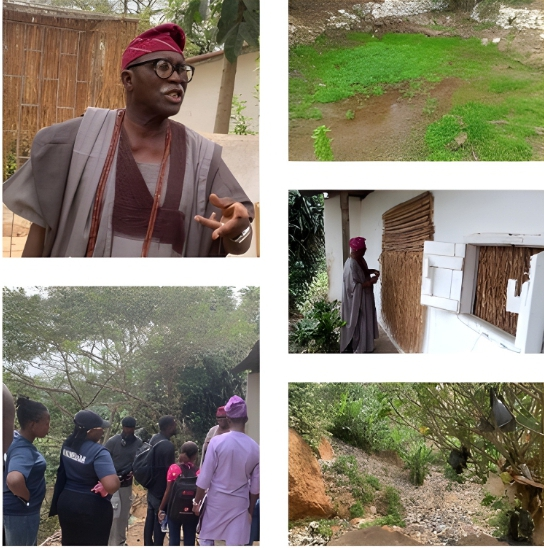
On the 9th of December 2024, a significant step was taken to preserve and promote the rich cultural heritage of Nigeria as the team from Iga Nigeria Limited visited the Etunreren Lefun Losun Shrine. The visit aimed to document the historical, cultural, and spiritual significance of the shrine, shedding light on its role in maintaining the cultural identity of the community and fostering a deeper understanding of traditional practices.
The Etunreren Lefun Losun Shrine stands as a testament to the enduring traditions of its host community. For generations, the shrine has served as a center for spiritual consultations, communal harmony, and cultural festivities. Known for its deeply rooted practices, the shrine has remained a symbol of identity, bridging the past and present through its preservation of ancestral values and traditions.
The visit emphasized the shrine’s importance in reviving and sustaining indigenous practices that have been overshadowed by modernization. The Iga Nigeria Limited team noted the value of reconnecting with such cultural landmarks, recognizing them as vessels of history, spirituality, and identity.
The Etunrenren Lefun Losun shrine stands as a testament to centuries-old traditions. Home to the revered Etunrenren natural spring, the shrine plays an indispensable role in the coronation process of Obas in the kingdom.
During the visit to the shrine, Otunba Ajadi Banjoko, the Chief Priest, delved into its historical and spiritual significance. He emphasized that the Etunrenren natural spring has been a central element in the rites of ascension for over a century. “The water from this spring holds immense spiritual power,” Otunba Banjoko stated. “It symbolizes purity, divine connection, and the unbroken lineage of traditional leadership in Ikorodu.”
The Chief Priest revealed a pivotal aspect of the coronation process, highlighting that any Oba-elect must undergo a rigorous traditional seclusion process, during which they are required to drink the spring water daily for three months. This ritual, he explained, is believed to cleanse and fortify the Oba-elect, preparing them spiritually and physically to assume their role as a custodian of the people, culture, and traditions of Ikorodu.
“The spring is more than just a natural resource; it is a living embodiment of our heritage. Drinking its water is not only symbolic but also a transformative experience for the Oba-elect,” he added.
The Etunrenren Lefun Losun Shrine Formerly known as Otuturenren, the shrine derives its original name from the cold, refreshing nature of its sacred spring water. Today, it is called Etunrenren, signifying its enduring relevance as a center of cultural preservation and spiritual reverence.
The shrine’s historical importance is closely tied to the Etunrenren Spring Water, which has been a source of mystery and spiritual sustenance for generations. According to oral tradition, the spring was discovered under extraordinary circumstances by a woman from the Aige family. The story, passed down through generations, recounts how the woman disappeared while washing clothes at the river. Her disappearance puzzled the community, but days later, her bangles and jewelry were found on a rock near the spring, marking the spot as sacred. This discovery solidified the spring’s spiritual significance and established it as a revered location for worship and traditional practices.
The Etunrenren Spring Water is more than a natural phenomenon; it is a sanctuary of historical artifacts and spiritual relics. Among its treasures is the sacred “Omi Abalaye,” a spiritually potent water that holds a critical role in the coronation and reign of traditional rulers in Ikorodu.
Over the years, the Etunrenren shrine has become a place where individuals seek divine intervention, healing, and guidance, further cementing its place in the hearts of the community.
Otunba Banjoko, accentuate that he has championed efforts to restore and protect the Etunrenren Spring Water and its surroundings. His dedication to preserving this sacred space has been a relentless campaign against pollution, urban encroachment, and neglect. Through his leadership, the shrine has been positioned not only as a religious and historical site but also as a vital ecological landmark in Lagos State.
Recognizing the significance of this site, the Lagos State Government has officially acknowledged the Etunrenren Spring Water as a key cultural and historical asset. This recognition has catalyzed initiatives to protect and promote the shrine. Plans are underway to nominate the Etunrenren Lefun Losun Shrine for inclusion in the UNESCO World Heritage List, further elevating its status on a global scale. This move aligns with broader efforts to preserve Nigeria’s cultural and historical landmarks, ensuring they remain vibrant for future generations.
Speaking during the visit to the shrine, Otunba Banjoko reiterated the importance of government and community collaboration in safeguarding the site. “The Etunrenren Spring Water is not just a source of life for our ancestors but a symbol of unity, heritage, and environmental sustainability,” he said. He called on the government and private stakeholders to invest in the site’s preservation, emphasizing that its protection would also serve as a boost to tourism and cultural education in Lagos State.
Beyond its spiritual significance, the Etunreren Lefun Losun Shrine also serves as a repository of knowledge. Oral histories and traditional practices preserved within its walls provide insights into the ways of life, governance, and belief systems of ancient times.
The custodians stressed that the shrine has continued to attract cultural enthusiasts, researchers, and tourists, thereby creating opportunities for cultural tourism and economic benefits for the community. Its preservation, they argued, would ensure that younger generations remain connected to their roots.
In conclusion, the Etunrenren Spring Water and Shrine represent an irreplaceable cultural and historical treasure for Ikorodu, Lagos State, and Nigeria as a whole. It is a testament to the rich heritage of the Yoruba people and a beacon of unity and spirituality. As the preservation efforts continue, it is hoped that the shrine will not only remain a site of cultural pride but also gain international recognition as a heritage site of universal value.
Through collective action and appreciation, the legacy of Etunrenren Lefun Losun will endure, bridging the past and the present, and inspiring generations to come.
 INN-HOUSE☆