Lagos, Nigeria – Lagos State has reaffirmed its status as a major economic powerhouse in Africa, with its Gross Domestic Product (GDP) reaching $259 billion based on purchasing power parity (PPP).
This milestone solidifies Lagos as the second-largest city economy on the continent, behind only Cairo, Egypt.
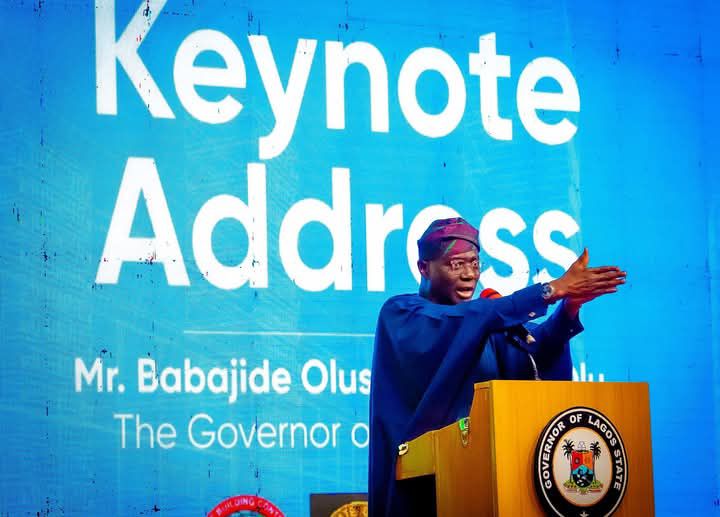
The announcement was made during the official launch of the Lagos Economic Development Update (LEDU) 2025 on Wednesday, where key economic performance metrics and future projections were unveiled.
Lagos has witnessed substantial economic growth, with its GDP expanding from N19.65 trillion in 2023 to N27.38 trillion in the first half of 2024, underscoring the resilience of Nigeria’s commercial capital amid economic reforms and significant infrastructural investments.
Despite this growth, the tax-to-GDP ratio remains low at 2.3%, highlighting the need for improved revenue mobilization strategies to support sustained development.
The Lagos State Government has projected further economic expansion for 2025, with the state’s GDP expected to increase from N54.77 trillion in 2024 to N66.47 trillion in 2025, with real GDP growth estimated between 5.02% and 6.49%.
The service sector is projected to maintain its dominant position, alongside improvements in agriculture and industrial production, while headline inflation is projected to be 34.2%, with food inflation slightly higher at 34.9%.
Additionally, the state anticipates generating N2.79 trillion in revenue for 2025, emphasizing the need for enhanced fiscal discipline and revenue diversification.
Lagos continues to be a prime destination for investors seeking opportunities in infrastructure development, technology, real estate, and manufacturing, with the state’s economic expansion, coupled with strategic government policies, presenting an attractive environment for both local and international businesses.
However, experts caution that challenges such as high inflation, foreign exchange volatility, and infrastructure deficits must be addressed to sustain long-term economic growth.
The National Bureau of Statistics (NBS) is set to rebase Nigeria’s GDP, updating the base year from 2010 to 2019, expanding the scope of economic activities measured, including digital economy (e-commerce, fintech, and online services), emerging sectors (modular refineries, pension fund administrators, and quarrying industries), and social programs (National Health Insurance Scheme (NHIS) and the Nigerian Social Insurance Trust Fund (NSITF)).
This update is expected to provide a more accurate reflection of Nigeria’s evolving economy and further highlight Lagos’ critical role in the nation’s economic landscape, as the state remains poised to strengthen its position as Africa’s economic hub, driving national and continental growth in the years ahead.

 INN-HOUSE☆