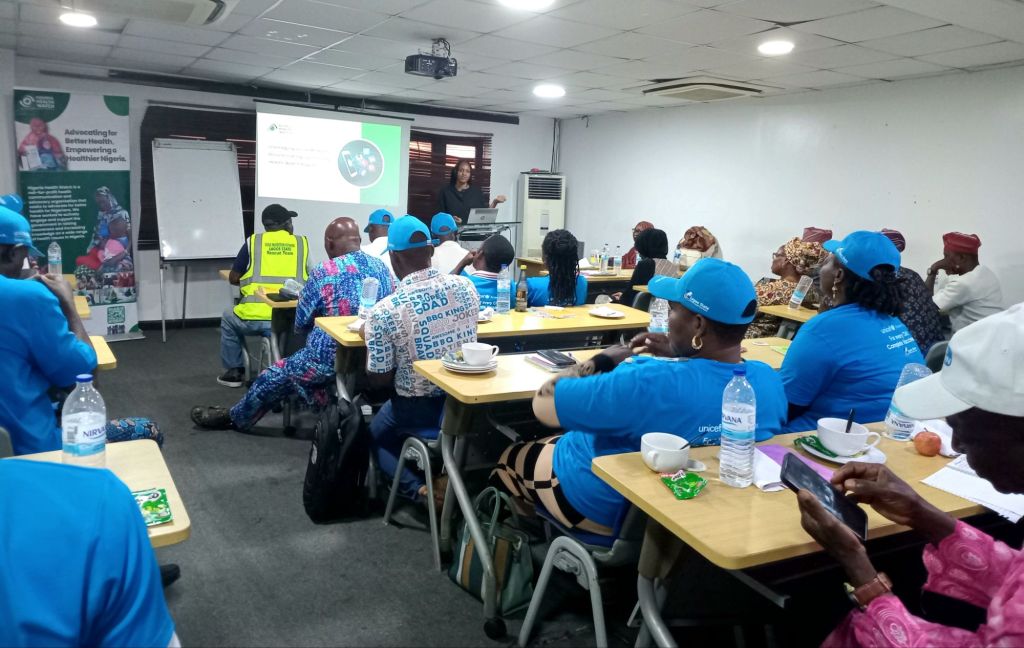
Nigeria Health Watch, a leading non-profit health communications and advocacy organisation, held a one-day capacity building training for community media practitioners and health directors in Lagos State in a significant move to bolster health system accountability and strengthen community engagement.
The impactful training, conducted on April 29, 2025, took place at the Lagos Chamber of Commerce and Industry Exhibition Centre, Ikeja, and attracted a wide array of participants, including community-based journalists and directors from the Lagos State Ministry of Health.
The program was organized under the Global Policy and Advocacy (GPA) Project, which is focused on improving health outcomes in Nigeria by engaging key stakeholders and fostering community-driven solutions in select states, including Lagos.
During the training, Mrs. Safiya Shuaibu Isa, Deputy Director, Advocacy and Partnership at Nigeria Health Watch, emphasized that the objective was to strengthen the capacity of community media practitioners to effectively report on primary health care issues.
She added that it also aims to enhance their understanding of health accountability frameworks, and equip them with strategies to counter misinformation in public health discourse.
Mrs. Isa noted, “We want to empower participants with practical tools for impactful health reporting and also explore avenues for sustained collaboration in health communication and advocacy.”
Mr. Sheriff Gbadamosi, Advocacy and Community Engagement Manager at Nigeria Health Watch, reiterated that the training was a critical component of the GPA Project in Lagos.
“We designed this capacity-building session to acknowledge the influential role that community media plays in shaping public opinion and improving access to accurate health information,” he said.
Gbadamosi stressed that fostering accurate and responsible health communication at the community level remains vital to strengthening the Nigerian health system and holding stakeholders accountable.
To ensure proper understanding of the topics discussed, interactive question and answer sessions were integrated into the training.
These sessions gave participants the opportunity to engage directly with facilitators, seek clarification, and share field experiences—enhancing the practical impact of the training.
Participants from across the state commended the training session, describing it as insightful, timely, and empowering.
They expressed appreciation to Nigeria Health Watch for recognizing the essential role of grassroots media in driving change and pledged to apply the knowledge gained to improve health reportage in their communities.
Nigeria Health Watch continues to lead in promoting evidence-based advocacy and public health communication, working closely with both government and community-level actors to drive sustainable health outcomes in Nigeria.

 INN-HOUSE☆