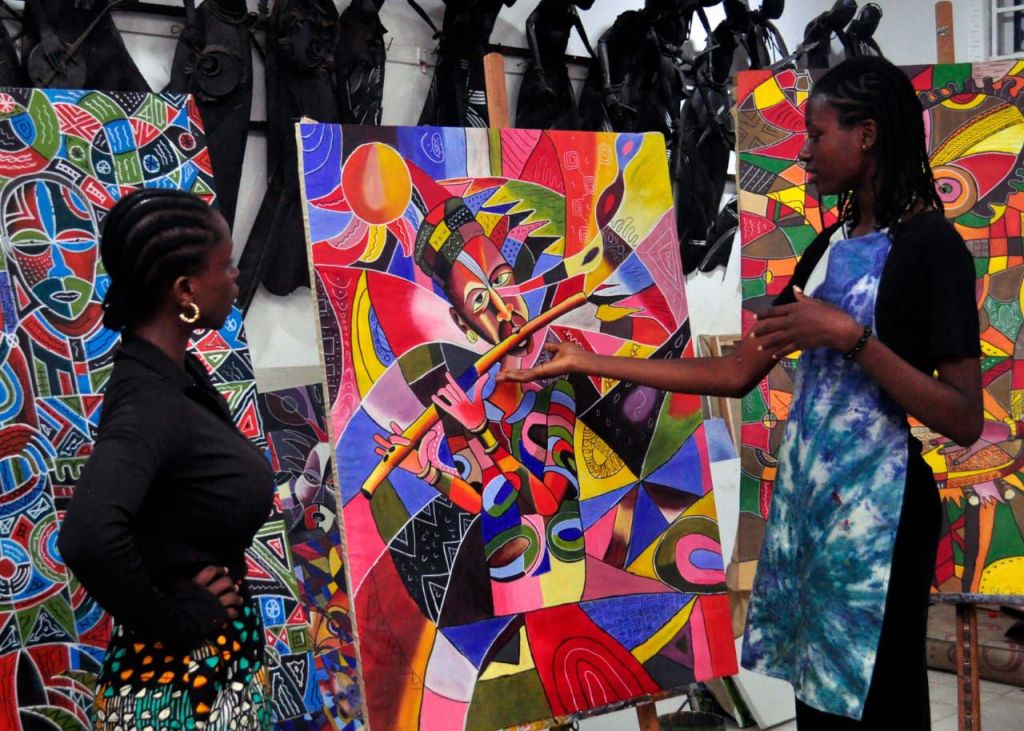
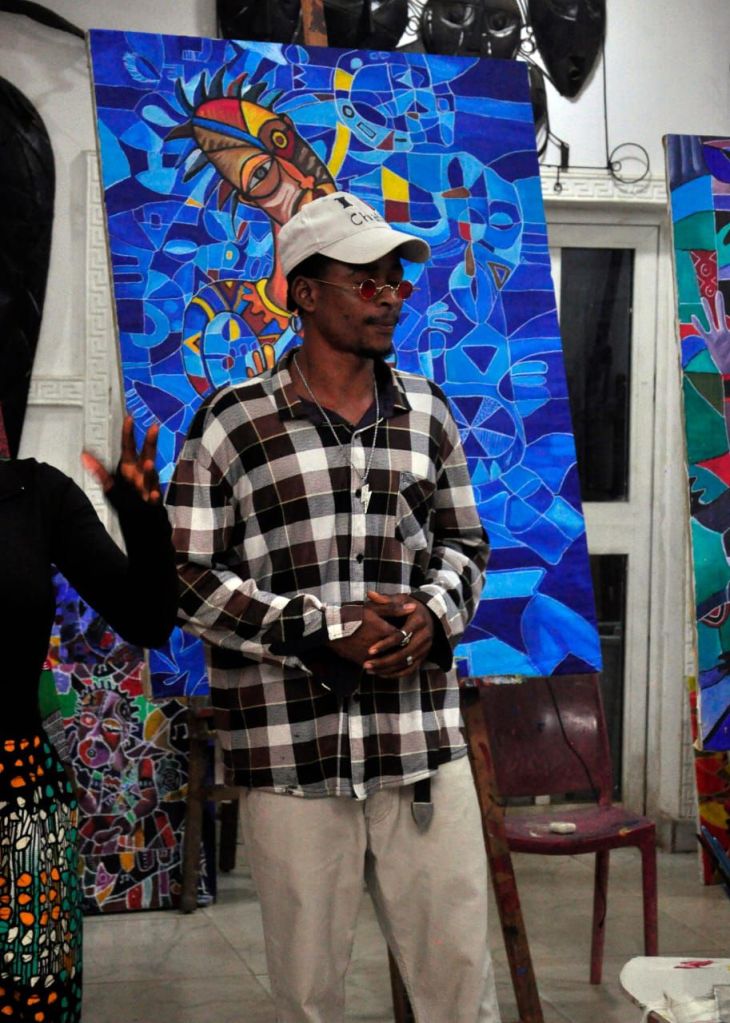
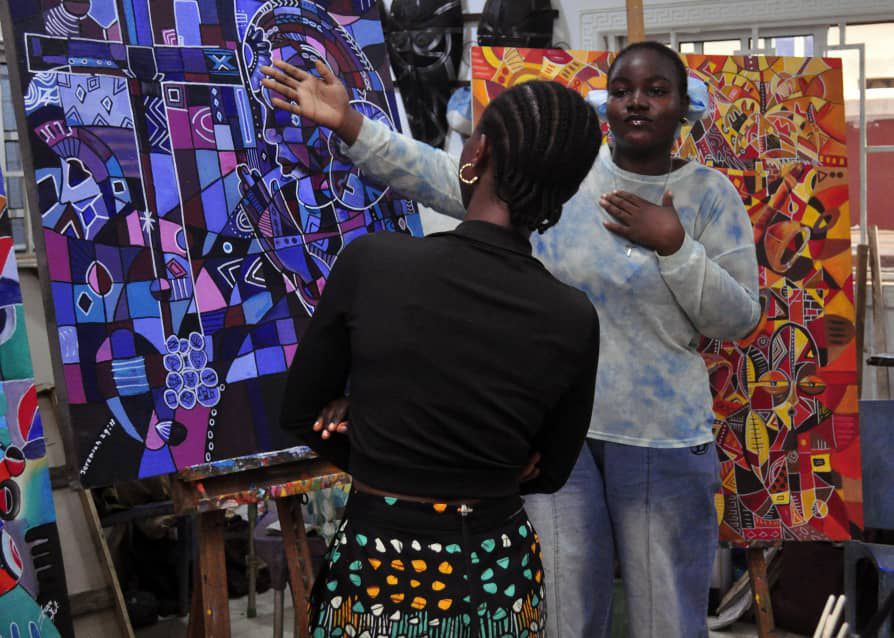
Oshodi Arts Gallery, a foremost hub for contemporary creativity and cultural expression in Nigeria, hosted a remarkable presentation of student artworks on September 2, 2025, spotlighting the enduring relevance of Cubism in African art.
The event featured over 20 Industrial Training (IT) students drawn from leading tertiary institutions across Nigeria, including universities and polytechnics.

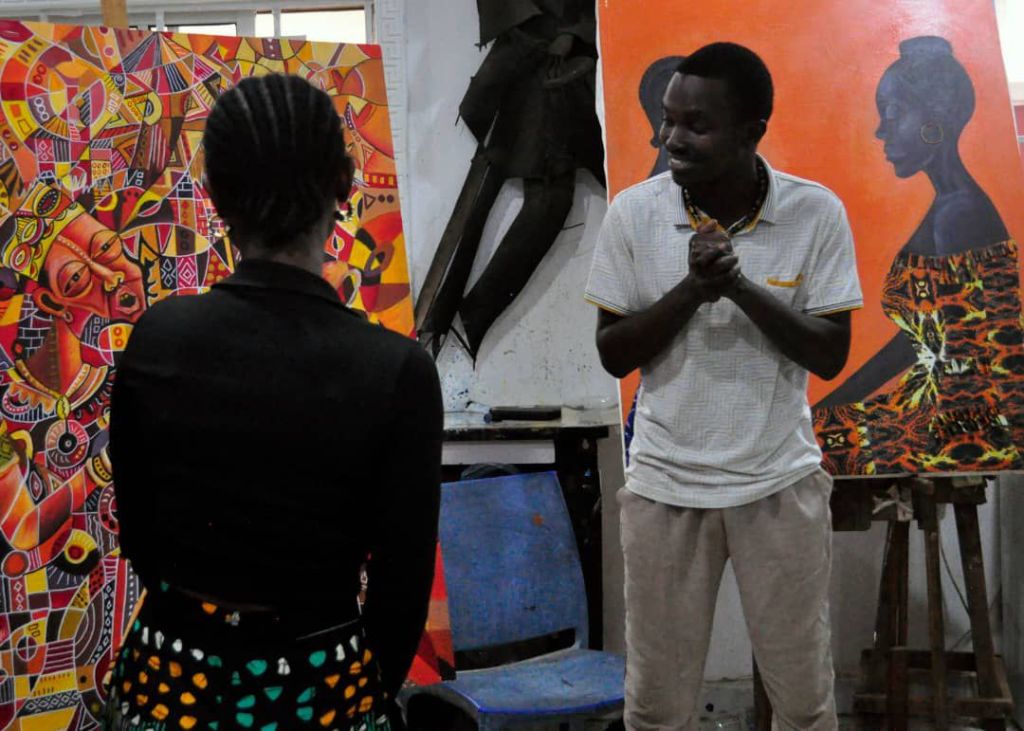
Their assignment, which centered on the theme “Cubism in Africa,” challenged them to interpret the iconic 20th-century art movement through uniquely African lenses.
From bold brushstrokes to fragmented perspectives, the students showcased stunningly crafted African Cubism pieces that reimagined cultural identities, traditional motifs, and contemporary realities in ways that resonated deeply with both history and innovation.

Delivering a keynote remark, Dr. Oshodi Seyi Paul, CEO of Oshodi Arts Gallery, applauded the students for their creativity, discipline, and vision. He described their works as evidence of a bright future for Nigerian art on the global stage.
“The sky is their stepping stone in the arts sector of Nigeria and beyond,” Dr. Oshodi declared, urging the students to continue pushing boundaries and redefining perspectives in visual expression.
Notable participating students included:
Nweke Sopulu Pascal – Nnamdi Azikiwe University (UNIZIK), Awka, Anambra State; Ogunrinde Rasaq – Tai Solarin University of Education (TASUED), Ijagun, Ijebu-Ode, Ogun State.


Alagbala Dolapo D. – Tai Solarin University of Education (TASUED), Ijagun, Ijebu-Ode, Ogun State; Adedokun Hezekiah O. – Olabisi Onabanjo University (OOU), Ago-Iwoye, Ogun State; Omole Ayomide Amos – Tai Solarin University of Education (TASUED), Ijagun, Ijebu-Ode, Ogun State; Oyeyiga Stephen Dami – Tai Solarin University of Education (TASUED), Ijagun, Ijebu-Ode, Ogun State; Oniwinde Johnson B. – Olabisi Onabanjo University (OOU), Ago-Iwoye, Ogun State.

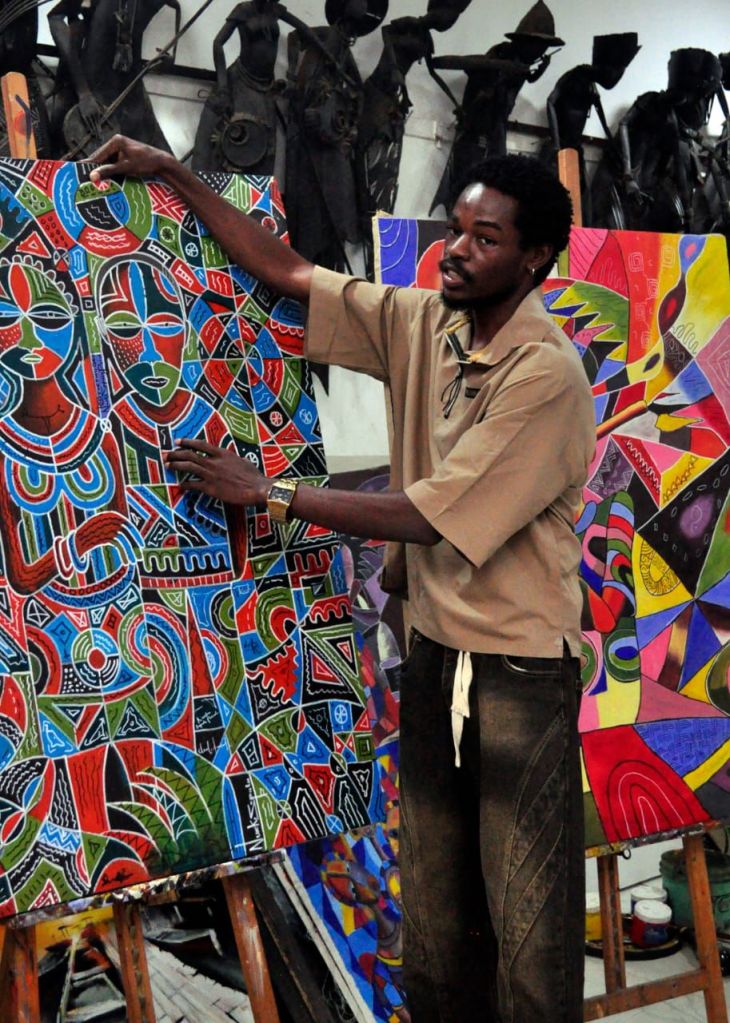
In their reactions, the students expressed deep appreciation for the rare opportunity to learn under the mentorship of Dr. Oshodi and the Oshodi Arts Gallery team.
They noted that the quality of knowledge and practical training they received at the gallery far exceeded what they had been taught in their respective schools, a factor they credited for the excellence and effectiveness of their Cubism projects.
They emphasized that the gallery not only improved their technical skills but also broadened their creative thinking and artistic confidence.

The students further thanked Dr. Oshodi Seyi Paul for providing a great platform that empowered them beyond classroom learning and prepared them for greater impact in Nigeria’s arts sector and beyond.
Others include Amechi Stella Maris N. – Nnamdi Azikiwe University (UNIZIK), Awka, Anambra State; Oyebola Samuel A. – Tai Solarin University of Education (TASUED), Ijagun, Ijebu-Ode, Ogun State; Abbas Abdulrafiu O. – Olabisi Onabanjo University (OOU), Ago-Iwoye, Ogun State; AOPE Taiwo Afusat E. – Tai Solarin University of Education (TASUED), Ijagun, Ijebu-Ode, Ogun State; Salaudeen Mubarak O. – Tai Solarin University of Education (TASUED), Ijagun, Ijebu-Ode, Ogun State.

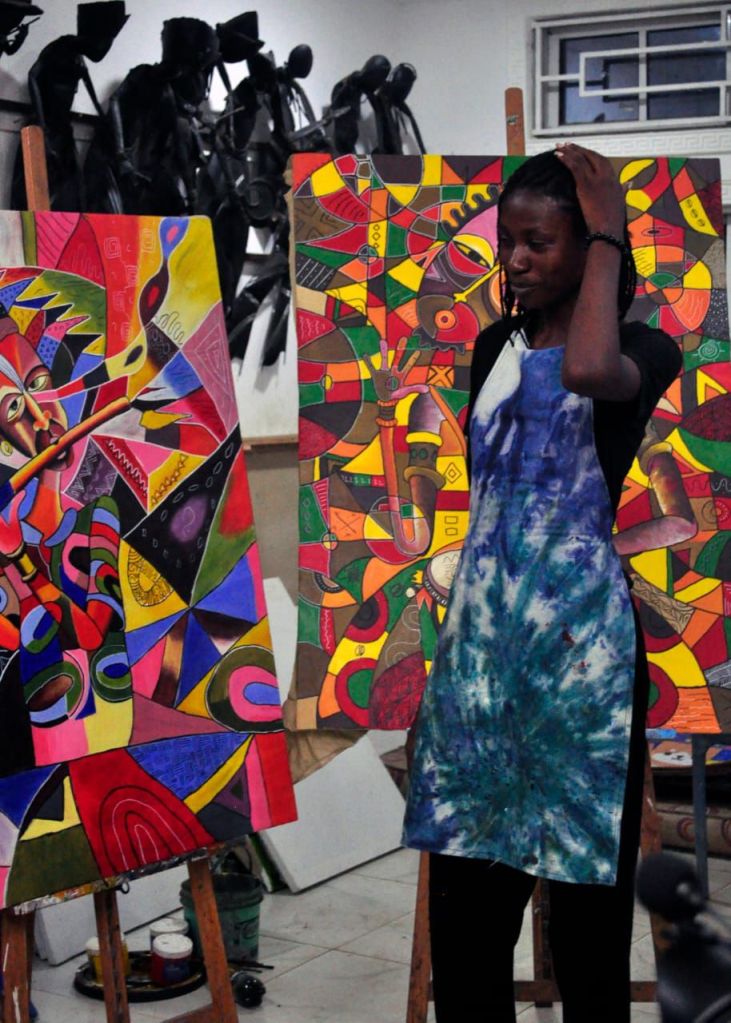
Cubism, one of the most influential art styles of the 20th century, emerged between 1907 and 1914 through the pioneering efforts of Pablo Picasso and Georges Braque in Paris.
By rejecting traditional techniques such as perspective, foreshortening, and chiaroscuro, Cubism introduced a radically new reality in which objects were fragmented, abstracted, and reconstructed to reveal multiple viewpoints simultaneously.
Also, in attendance at the presentation was Moses Bamba, the gallery’s painting instructor and a versatile artist, as well as a graduate of ABU Zaria.
The Nigerian students, however, infused this global art language with local textures, cultural patterns, and African stories, producing works that celebrated both heritage and experimentation.
The successful presentation not only underscored the Oshodi Arts Gallery’s role in nurturing Nigeria’s next generation of artists but also highlighted the rising influence of African interpretations of Cubism in global artistic discourse.

 INN-HOUSE☆