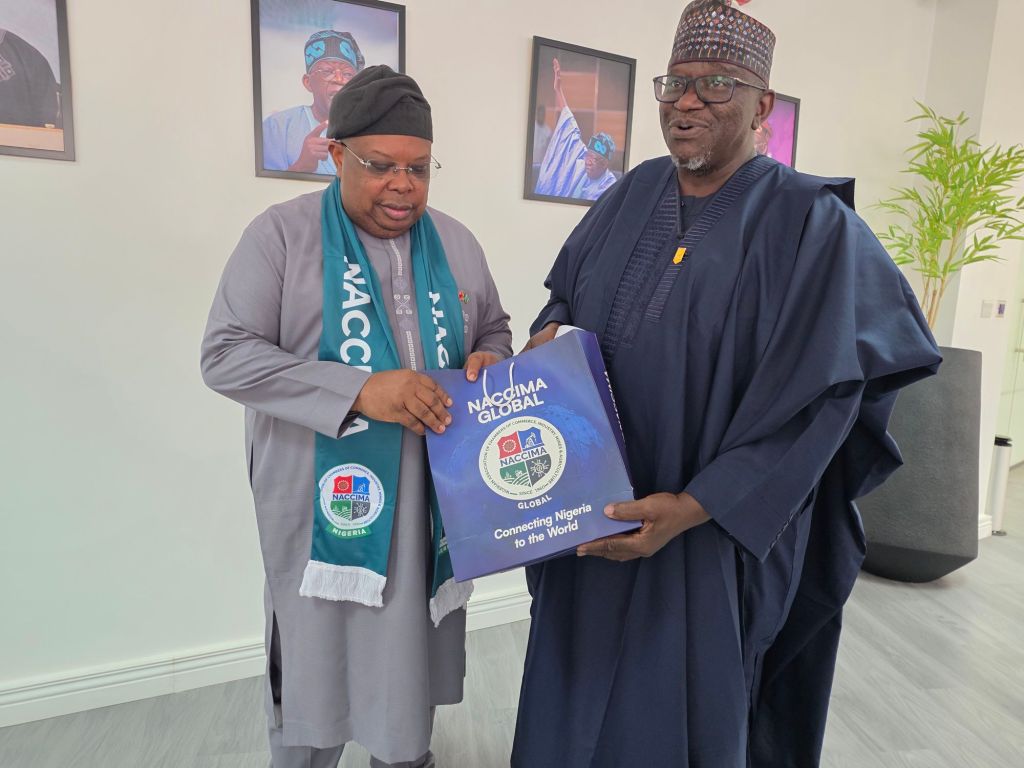
The Nigeria–China Strategic Partnership (NCSP) has stepped up efforts to strengthen collaboration with the Organized Private Sector, signaling a renewed push to accelerate Nigeria’s industrial development through stronger bilateral engagement with China.
This position emerged at a high-level meeting between NCSP officials and the leadership of the Nigerian Association of Chambers of Commerce, Industry, Mines and Agriculture (NACCIMA), where both sides resolved to align institutional strategies aimed at advancing Nigeria–China economic relations.
Central to the discussions was the need to ensure that Small and Medium Enterprises (SMEs) become key beneficiaries of trade, manufacturing, and investment flows arising from the partnership.
Director-General of NCSP, Joseph Tegbe, explained that the partnership was conceived as a coordinated framework to manage Nigeria’s economic engagement with China in a more structured and outcome-driven manner.
According to him, the platform is mandated to supervise initiatives linked to the Forum on China–Africa Cooperation (FOCAC), drive priority economic programmes, and facilitate high-impact industrial projects in critical sectors.
He stressed that the next phase of engagement would focus on harmonising ongoing initiatives, improving inter-agency collaboration, and establishing clearer execution mechanisms.
The goal, he noted, is to ensure that Nigerian enterprises—particularly SMEs—derive sustainable and measurable benefits from bilateral trade and investment arrangements.
Deliberations at the meeting also examined existing partnerships and prospective investment pipelines.
Both parties acknowledged the need to improve coordination across federal and state levels to enhance policy consistency, eliminate duplication, and maximise economies of scale.
Tegbe further underscored the importance of leveraging strategic trade frameworks, including China’s Zero-Tariff Agreement with African countries, describing it as a significant opportunity to expand domestic production capacity, promote value addition, and strengthen Nigeria’s export competitiveness.
In his remarks, President of NACCIMA and Chairman of the Organized Private Sector of Nigeria (OPSN), Engr. Jani Ibrahim, lauded NCSP’s structured engagement approach and its emphasis on SMEs as catalysts for inclusive growth.
He reaffirmed the organized private sector’s commitment to working closely with the partnership to mobilise businesses, provide coordinated policy input, and ensure tangible enterprise-level outcomes from Nigeria–China engagements.
The two sides identified key areas for practical collaboration, including integrating SMEs into manufacturing value chains tied to Chinese investments, expanding agro-processing and value-added production, enhancing technical and vocational training to bridge industrial skills gaps, and developing geo-cluster industrial parks to drive regional manufacturing ecosystems.
They agreed to establish a formal coordination framework to translate policy alignment into measurable deliverables, focusing on investment facilitation, SME capacity building, industrial cluster development, and export-led growth.
The engagement reflects NCSP’s determination to transform diplomatic relations into concrete economic outcomes by widening opportunities for Nigerian businesses and strengthening national productive capacity.
The initiative aligns with the Renewed Hope Agenda of Bola Ahmed Tinubu, which prioritises sustained, inclusive growth anchored on industrial productivity and private-sector leadership.

 INN-HOUSE☆