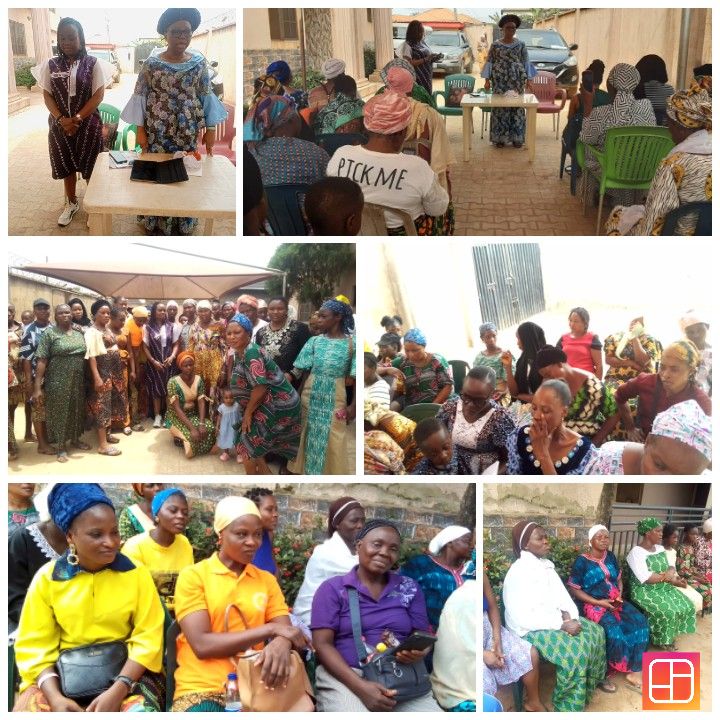
Women across Igbogbo-Baiyeku LCDA gathered on February 21 for a transformative workshop organized by the Giving for Living Foundation, themed “Safeguarding Your Well-Being After a Traumatic Experience.”
The initiative focused on equipping women with practical strategies to cope with and recover from traumatic events while prioritizing their mental and emotional health.
The event attracted over 100 participants from different communities within Elepe and its environs, reflecting the growing awareness of the need for mental health education and support at the grassroots level.
The workshop created a safe and supportive environment where women could openly discuss their experiences and learn effective coping mechanisms.
Participants were guided through discussions on recognizing trauma triggers, managing stress, and building strong support systems within their families and communities.
The Founder and Director of the Giving for Living Foundation, Reverend Mrs. Ebunoluwatoyin Idowu, explained that the foundation was established with a clear mission — to stand by women and young girls during difficult times and help them rebuild their lives.
According to her, the organization believes that with the right support system, encouragement and empowerment, beneficiaries can overcome hardship and achieve greatness.
She noted that the foundation provides assistance to women who have no stable means of livelihood, particularly those whose children are out of school due to financial constraints.
Through the provision of financial tokens and start-up support for small-scale businesses, many women have been able to re-establish themselves economically.
As a result, several children have returned to school, while families once burdened by hardship are now experiencing renewed hope and stability.
“God has put smiles on the faces of many in this community whose stories have changed,” she said, emphasizing that empowering women remains central to the foundation’s vision.
Reverend Idowu added that while government efforts are commendable, collaborative partnerships between non-governmental organizations and public institutions are essential to addressing the growing needs of vulnerable groups.
She expressed joy over the increasing number of children returning to school through the foundation’s interventions, describing it as a fulfillment of the organization’s mission to see families stand strong again.
Reverend Idowu also encouraged women who are still struggling in silence to step forward and seek support, assuring them that hope remains alive.
“Our message is simple — hope in God, trust in God. The same God who has done it for others can do it for you,” she stated, urging women to embrace empowerment opportunities and move forward toward a future filled with joy, peace and greatness.
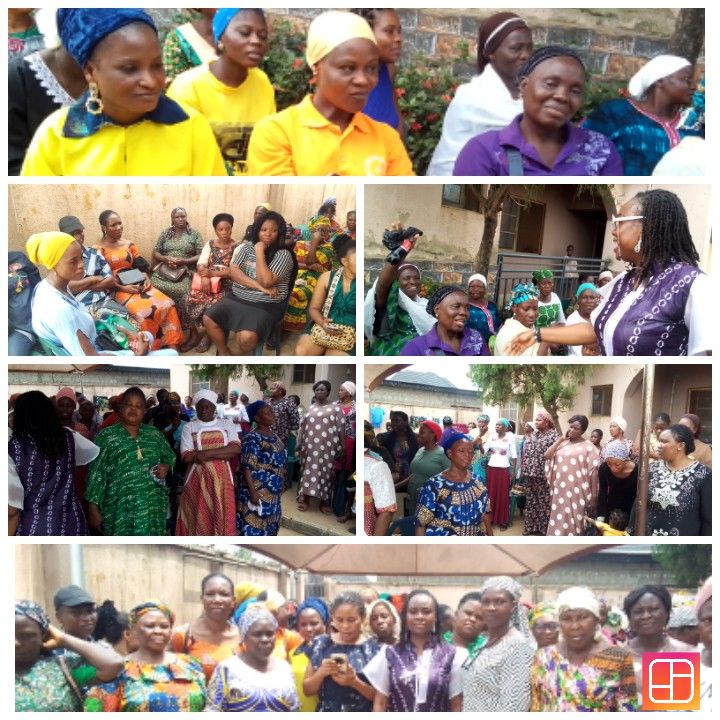
The guest speaker, Mrs. Motunrayo Odunmuyiwa, a consultant to organizations — particularly non-governmental organizations focused on vulnerable women and children — delivered an in-depth session on the workshop theme.
The session brought together widows, mothers, and women who have experienced various forms of trauma, including domestic abuse.
In her presentation, she carefully explained the meaning and different types of traumatic experiences, describing trauma as distressing, harmful, and deeply painful.
According to her, trauma often leaves individuals in a prolonged “danger mode,” affecting their overall health and daily functioning.
She stressed that while traumatic experiences may be unavoidable, dwelling on them without taking deliberate steps toward healing can further endanger one’s well-being.
“It is important that we safeguard our well-being so that we can heal — not just survive, but thrive,” she said.
She highlighted the need to secure one’s mental health, emotional balance, and physical stability after experiencing trauma, noting that intentional and practical actions must be taken to prevent long-term damage.
The workshop featured interactive discussions, with participants sharing personal stories and reflections.
Mrs. Odunmuyiwa expressed satisfaction at the level of engagement and feedback received, stating that many women openly shared the practical steps they intend to take after the workshop.
These include prioritizing their safety, choosing self-care, avoiding overthinking, and refusing to remain trapped in past painful experiences.
She noted that the true impact of such workshops lies not only in the knowledge shared but in the actions participants take afterward.
To ensure lasting change, she disclosed plans for follow-up evaluations in the coming weeks and months to assess how effectively participants have applied what they learned.
Additional workshops may also be organized if necessary.
The event also featured emotional testimonies from beneficiaries.
Mrs. Laura Glory, a participant, shared her personal story of healing and renewed hope.
She expressed deep gratitude to God and the organizers for what she described as a life-changing encounter.
According to her, she felt spiritually led to attend the programme, which she said became a turning point in her life.
The single mother recounted years of emotional pain and struggles, particularly challenges experienced in her marriage and the burden of raising her children alone.
She revealed that she often battled self-blame, anxiety, and persistent sadness, sometimes questioning her life decisions and crying daily under the weight of trauma.
However, she said the teachings and encouragement received during the workshop helped rebuild her confidence and reshape her perspective.
“I have learned that we should stop overthinking and encourage ourselves. Even in trauma, we must not use negative words against ourselves,” she stated.
She added that the session reminded her not to internalize hurtful comments from others but to remain steadfast in faith and self-belief.
Mrs. Glory noted that the workshop strengthened her spiritually and emotionally, assuring participants that God would help them overcome their troubles.
She commended the organizers for their efforts, praying for greater strength, grace, and expansion for the foundation.
During an interview with Ikorodu News Network, she stated that programmes like this serve as a vital support system for women battling emotional pain and trauma.
She further called for wider awareness of such initiatives, stressing that many women are silently suffering and have not had access to empowering words and guidance that could restore their hope.
Another beneficiary, Mrs. Eddie Abigail, also shared her reflections, explaining that the facilitator carefully broke down the meaning of key concepts discussed during the session.
According to her, participants were taught that safeguarding means taking practical steps and deliberate actions concerning one’s life and choices.
Well-being, she noted, relates to one’s health, future, and overall personal welfare, while trauma refers to painful experiences such as accidents, domestic violence, isolation, and other distressing life events.
She said the explanations and examples given during the workshop deeply resonated with many of the women in attendance.
“A lot of things were mentioned today that truly helped the women who came,” she stated, adding that the session provided clarity and encouragement for participants dealing with emotional wounds.
Sharing her personal takeaway, Mrs. Abigail emphasized her determination not to allow past trauma to control her future.
She said she learned to confront painful experiences with courage and resilience, declaring that she would no longer permit trauma to pull her down.
“I should be able to stand and tell that trauma that I am moving forward — I have overpowered you. You cannot wreck me,” she affirmed.
She encouraged women to remain focused and place their trust in God, stressing the importance of self-control, speaking thoughtfully, and constantly affirming personal strength and victory over traumatic experiences.
Many of the women expressed appreciation to the foundation for bringing such a timely and impactful programme to Elepe, describing the workshop as enlightening and empowering.
The workshop, which drew widows, single mothers, and other women facing life challenges, created a platform for learning, reflection, and renewed commitment to emotional and mental well-being.
Participants left with practical strategies and a strengthened resolve to rebuild their lives with confidence and faith.
The session concluded with a renewed call for continuous community engagement and sustained support for women facing emotional and psychological challenges, as well as the distribution of relief materials provided by the Giving for Living Foundation to further support the beneficiaries.
 INN-HOUSE☆