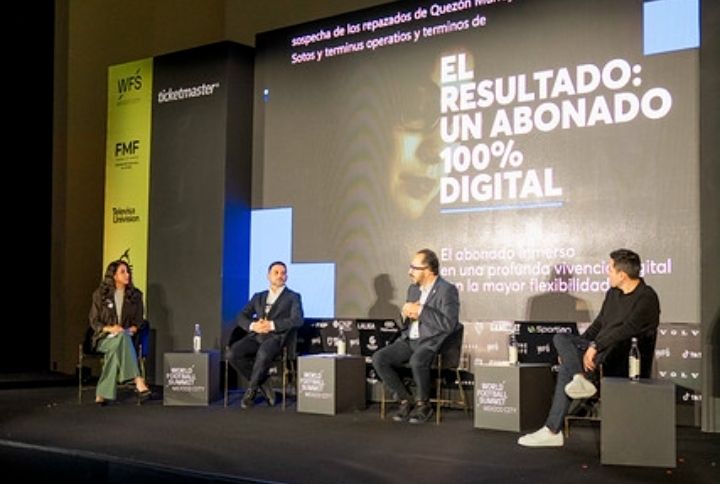
MEXICO CITY, June 5, 2026 — Industry leaders, club executives, technology experts, and sports business innovators gathered on the final day of the World Football Summit (WFS) Mexico City to examine how football organizations can strengthen fan engagement, maximize commercial opportunities, and build sustainable revenue streams beyond matchday activities.
Held at the Camino Real Polanco Hotel, the summit’s concluding sessions highlighted a growing reality within global football: success can no longer be measured solely by what happens on the pitch.
Instead, the sport’s future depends on understanding fan behavior, leveraging data effectively, and creating meaningful connections with supporters throughout the year.
Data Becomes Football’s Most Valuable Asset
One of the central themes of the conference was the increasing importance of fan data and the challenge of transforming information into measurable business value.
While many clubs have developed the capacity to collect fan information, industry experts stressed that the real competitive advantage lies in analyzing and monetizing that data.
Among the standout examples presented was Club América, which has spent years refining its fan intelligence strategy to deliver greater value to commercial partners.
Speaking during a panel session, Club América’s Director of Commercial Intelligence, Jorge Balandra, emphasized the club’s evolution beyond traditional football operations.
«”Club América today is not just a sports team. It is a new media platform for brands,” he stated.»
Supporting this perspective, Marketing Director Baptiste Maurel explained that corporate sponsors now seek deeper audience insights rather than simple social media metrics.
According to Maurel, brands are increasingly interested in understanding fan lifestyles, purchasing habits, stadium attendance patterns, and engagement behaviors beyond football consumption.
Winning the Next Generation of Fans
Discussions also focused on the challenge of attracting younger audiences whose entertainment habits differ significantly from previous generations.
Alejandro Lesende, Chief Administration Officer of CONCACAF, showcased “Concacaf Kickoff,” a youth-focused initiative designed specifically to engage children and teenagers through a collaborative development process.
Rather than relying solely on conventional marketing approaches, the project actively involved young people in shaping the brand’s identity.
«”We developed this brand with young people. The look, the colors, and the overall concept were created together with children and teenagers,” Lesende explained.»
The initiative reflects a broader industry effort to remain relevant among younger consumers who increasingly divide their attention across gaming, social media, and digital entertainment platforms.
Gaming Emerges as Football’s New Frontier
The growing influence of gaming and esports was another major talking point during the summit.
Juan Diego García, CEO for Iberia and Latin America at GGTech Entertainment, warned that football organizations risk losing future audiences if they fail to embrace the gaming ecosystem.
He noted that global gaming audiences have already surpassed the viewership figures of major sporting events, including the FIFA World Cup and the Super Bowl.

«”We should not resist something that is clearly becoming much bigger. Instead, we must recognize the tremendous opportunities it presents,” García remarked.»
Industry stakeholders agreed that gaming platforms offer football organizations new pathways to connect with younger demographics and build long-term loyalty.
Traditional Broadcasting Faces Transformation
Media executives attending the summit highlighted changing viewing habits among younger audiences, many of whom no longer consume full ninety-minute football matches.
Kelly Shouldice, Vice President of Brand and Content at the Northern Super League, argued that storytelling has become just as important as the game itself.
«”The match remains the foundation, but it is no longer the primary product,” Shouldice said.»
She explained that younger fans increasingly prefer short-form content, behind-the-scenes stories, and player-driven narratives over traditional match broadcasts.
This shift has forced broadcasters and rights holders to rethink content strategies.
Daniel Benchimol, Director of Partnerships for the United States and Latin America at DAZN, revealed that the streaming platform has experienced substantial subscriber growth since acquiring NFL distribution rights three years ago.
However, he emphasized that future expansion will depend on delivering more than live sporting events.
Adding to the discussion, One Life Agency Founder and CEO Sascha Fussmann argued that modern audiences are increasingly drawn to personal stories rather than institutions.
«”People want to follow individuals. The organizations that can successfully build and control player-centered narratives will hold a significant advantage,” Fussmann noted.»
Stadiums Reimagined as Year-Round Business Hubs
Beyond digital engagement, football executives explored ways to maximize the economic potential of stadium infrastructure.
José Ramón Fernández, CEO of Grupo Pachuca, challenged the traditional view of stadiums as venues used only during matches.
«”The greatest revenue opportunities begin ten minutes after the match ends,” Fernández said.»
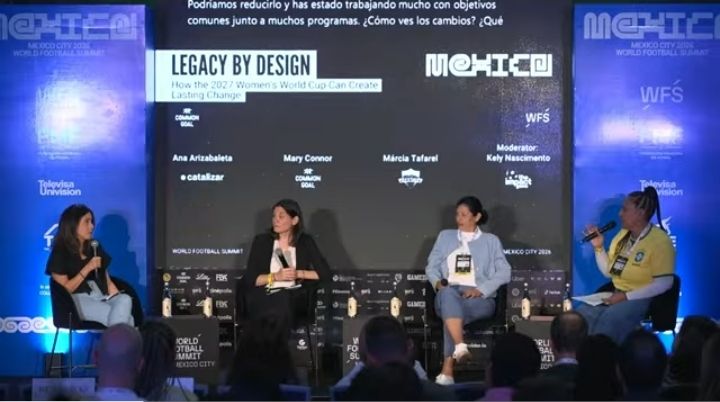
Experts advocated for integrated development models that transform stadiums into multi-purpose destinations featuring residential projects, commercial spaces, hotels, entertainment facilities, and office complexes.
Such developments, participants argued, can generate consistent economic activity and revenue throughout the year rather than relying exclusively on football fixtures.
Building Sustainable Football Business Models
In addition to commercial innovation, the summit examined football’s role in community development, advances in refereeing technology, and the changing ways younger generations engage with the sport.
Despite the diversity of topics discussed, a common question emerged throughout the conference:
How can football organizations create sustainable business models that reflect the evolving expectations and behaviours of modern fans?
As the World Football Summit Mexico City concluded, industry leaders appeared united in their belief that football’s future growth will depend not only on the quality of competition on the field but also on the strength of the connections clubs build with supporters every day of the year.

 INN-HOUSE☆