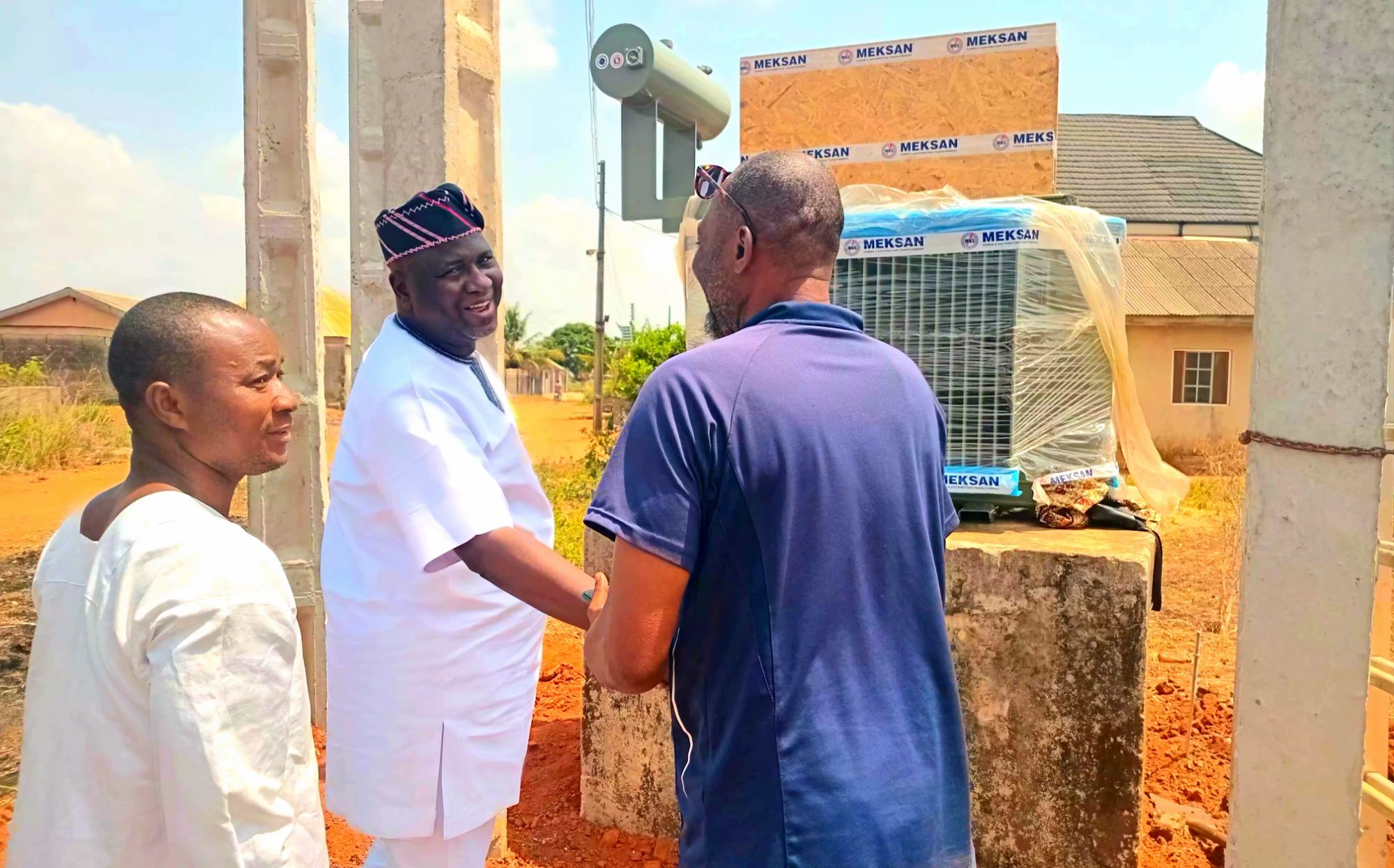
The Lagos State Government, through the Office of Rural Development, has intensified its rural electrification campaign with the strategic distribution and installation of brand-new electricity transformers across underserved communities in the state, a development widely hailed as a transformative step toward inclusive growth and grassroots development.
In what has become a chain of coordinated interventions stretching across rural and semi-urban communities, the administration of Governor Babajide Olusola Sanwo-Olu has continued to bridge infrastructural gaps through the delivery of electricity infrastructure aimed at improving living standards, stimulating local economies, and expanding access to stable power supply.
At the center of the initiative is the Office of Rural Development, headed by the Special Adviser to the Governor on Rural Development, Dr. Nurudeen Yekinni Agbaje, whose office has overseen the deployment of transformers to dozens of communities under the Lagos State Rural Electrification Initiative.
In an extensive op-ed assessment of the programme, Dr. Agbaje described the intervention as a practical demonstration of the Sanwo-Olu administration’s commitment to equitable development under the THEMES Plus Agenda.
According to him, electricity remains one of the most critical drivers of socio-economic growth, particularly in rural communities where businesses, healthcare delivery, education, and security largely depend on stable power supply.
“Rural electrification is not just about transformers or power supply; it is about restoring hope, stimulating economic opportunities, and improving the quality of life for residents who have long struggled with inadequate infrastructure,” Dr. Agbaje stated.
The initiative, which began in April 2024 and has since brought improved electricity supply to several communities, recorded a major milestone in January 2026 when residents of Ifesowapo CDA, Oloja Estate in Epe applauded Governor Sanwo-Olu for the installation of a new transformer that greatly enhanced power supply in the area.
Barely days later, residents of Mowo Extension Community Zone 3 in Badagry celebrated another intervention following the installation of a transformer delivered through the Rural Electrification Initiative.
Residents noted that the project immediately enhanced business operations and reduced the burden of unstable electricity.
The wave of interventions continued on January 31, when Ijagemo Central CDA in Iba LCDA received a long-awaited transformer installation that residents described as a turning point for socio-economic activities in the area.
By February 3, the Isale-Agoro and Ilara communities in Epe Local Government Area also benefited from the programme, with the Office of Rural Development reaffirming that no community would be left behind in the state’s infrastructure expansion drive.
For many residents, the interventions represented more than physical infrastructure; they symbolized government presence and responsiveness in communities that had endured years of poor electricity supply.
At Progressive Community in Egan, Igando-Ikotun LCDA, stakeholders applauded the state government after a new transformer was installed on February 8, noting that the response to their request demonstrated a government willing to listen to grassroots demands.
That same day, residents of United Enclave Community in Selewu, Igbogbo-Baiyeku LCDA, as well as Ajaiyi-Oronti CDA in Agbele, Ikorodu Central, and Oluja CDA in Lasuwon, Ikorodu North LCDA, all celebrated the arrival of brand-new transformers under the same electrification programme.
In each location, community leaders praised the intervention for improving electricity access and boosting economic activities, particularly among traders, artisans, and small business operators heavily dependent on power supply.
One of the most significant milestones of the initiative came on March 10, 2026, when the Lagos State Government delivered and installed two transformers in Omigo communities in Isiu, Ikorodu North LCDA.
The intervention restored electricity to Omigo CDA Phase One and Omigo Onafoniyin Phase Two after nearly two years of blackout, while simultaneously extending electricity access to about ten surrounding communities.
Residents described the project as life-changing, noting that schools, households, religious centers, and local businesses had suffered severe setbacks during the prolonged outage.
The same day also saw transformer installations delivered to Banana Estate CDA Phase One in Igbe-Lara and Pacesetter CDA in Ibeshe, both within Igbogbo-Baiyeku LCDA, further expanding the government’s electrification footprint within Ikorodu Division.
In Badagry Division, the state government continued the momentum with interventions in Finayon CDA in Ajara Agbovipe and Ajido Community on March 14, where residents applauded the administration for addressing longstanding electricity challenges through timely transformer installations.
The Rural Electrification Initiative equally extended to Apapa-Iganmu LCDA, where Olaitan Ojoafeje CDA benefited from a newly installed transformer on April 2, while Animashaun/Otun CDA and Maye/Eleshi CDA in Epe, alongside Divine Homes CDA in the Lekki-Ajah corridor, also received brand-new transformers under the programme.
Dr. Agbaje, during an inspection tour of electrification projects across the Ikorodu axis and other parts of the state on March 13, emphasized the importance of community ownership and maintenance of the facilities.
He urged Community Development Associations to safeguard the infrastructure, stressing that sustainability and collective responsibility were essential to the long-term success of the initiative.
The latest phase of the electrification programme was recorded on May 6, when Holy Land CDA in Apapa and Oluwalogbon Kajola Agiliti CDA in Ikosi-Isheri LCDA both received new transformers aimed at ending years of unstable electricity supply.
Residents in the affected communities expressed optimism that the interventions would improve security, encourage commercial activities, and enhance daily living conditions.
Across the various benefiting communities, a common narrative has emerged — one of renewed confidence in grassroots governance and visible infrastructural impact.
From Epe to Badagry, Ikorodu to Iba, the consistent rollout of transformers has become a defining feature of the Lagos State Government’s rural infrastructure strategy, reflecting a deliberate effort to ensure that development is not concentrated solely in urban centers.
Dr. Agbaje maintained that the electrification programme remains ongoing, with additional communities already lined up for subsequent phases of intervention.
He reiterated that the Sanwo-Olu administration remains committed to expanding electricity access, reducing infrastructural deficits, and ensuring that rural communities fully benefit from the dividends of governance.
As transformers continue to light up previously underserved communities across Lagos State, the Rural Electrification Initiative is increasingly being viewed as more than an infrastructure programme — but as a strategic investment in economic empowerment, social inclusion, and sustainable grassroots development.

 INN-HOUSE☆